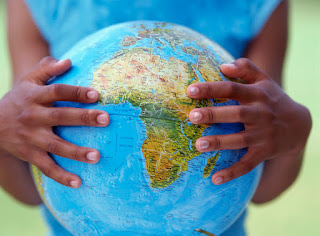
So what happens when you have a childhood spanning three continents, starting school in Nigeria, continuing in the UK and finishing in Japan? Well, you pursue an equally international career and continue navigating life through seeing things with your own eyes, living the mantra:
- Àwòrán kan sàn jù ọrọ ẹgbẹ̀rún lọ
- A picture is worth a thousand words
- 百聞は一見にしかず
And what is it I saw visiting numerous countries throughout our amazing world? Well, there are many places with several interesting and wonderful aspects distinguishing them from anywhere else. By expanding our horizons, we can appreciate the world for its diversity. In discovering the various distinctions, I certainly found great pleasure! However, when we look deeper into other cultures, we can recognise even more aspects that are similar to our own. By enjoying these diasporic stories, I also hope you will see that we do not have to just concentrate on our differences. We all have more in common than initially meets the eye, more similarities than differences, and this makes us part of one human community.

Abíọ́dún ‘Abbey’ Ọlátòkunbọ̀ Abdul | SFHEA
Abíọ́dún (pronounced A-byaw-doon) is Yorùbá-Nigerian writer and UNESCO Global Poetry Slam Champion 2022. Her expressive writing includes life essays and diasporic travel stories posted on Yorùbá Yonder, through which she additionally conceived the decolonising/internationalising YNAD Talks event series. She is penning a 3-part autoethnographical memoir-polemic series encompassing her schooling across Yorùbá-Nigeria, Scots-Britain and Japan (achieved through a Japanese Government scholarship) with nuanced views on identity, ideology, social framework and prejudice - Stained Glass Eyes: Race, Family and Multiculturalism. Book 1 is nearing publication and Book 2 is part of her PhD research funded by a Faculty of Arts scholarship. She also writes short stories centring Yorùbá culture as well as poetry on social justice and topics celebrating our common humanity. Her work has been published in anthologies; she writes/podcasts for literary magazines, performs at literary festivals/events, delivers writing workshops; and presents at academic conferences. As an innovator in the creative writing field seeking to support greater inclusion of diverse creatives, she also founded the Global Majority Writers (GMW) collective which has grown to over 270+ members worldwide. Read more...

More about the UNESCO Global Poetry Slam here

**Latest stories**
Summary:

The mask, a fence, a gatekeeper,
protection, deflection, yet visual invitation
I see you, you see me
Through a mesh, through a lens
Dark eyes, full of light
Dark nose, inhaling light air
Dark mouth, rounded contours
closed but poised for action:
sonic, verbal, culinary, breath
Facial shield sieves youthful repose,
hearing quietly, seeing intently
Virgin knowledge steadily forming,
forging wisdom’s foundations
Summary:
Who We Be: Global Black Women’s Creative Anthology (pending) / Extending String Quartets: Future Echoes / Educating Black Nottingham / Afrofuturism Short Stories / Other Tongue, Mother Tongue 2025 / African Migration Report 2024: Japa Fire / Other Tongue, Mother Tongue 2024 / Multivox / Notes To Self / Our Stories Redefined 2023: Strange Water / Oluwale Now 2023 / Writers Space Africa July 2023: Robots / Weighted Words / Loose Connections / Squat Diddley /
After winning various poetry awards throughout childhood, I still enjoy composing poems, stories and life writing pieces focusing as ever on social justice and topics celebrating our common humanity. These have been included in various anthologies and resulted in specially commissioned pieces.


**Upcoming Events**
Summary:


I will be reciting extracts from ‘The Weight We Carry’ - a powerful illustrated story exploring racial trauma, embodied stress, resilience, and healing through the journey of a young girl named Bisi - alongside a selection of my poetry with overlapping ‘Adu Maadan’ themes.
Join us to experience this powerful narrative and soul-shifting visuals at The Waiting Room, Peckham Rye Station, Station Way, London, SE15 4RX.
Event tickets: https://bit.ly/BlkBodExhibition
Order books: https://www.adumaadan.uk

Summary:
‘Past Speculation for Future Inspiration: Narrative/Artistic Empowerment through African Authenticity’ paper pres (pending)
African Studies Association UK (ASAUK) & University of Durham, UK
‘From Africa to Europe to Asia in One Childhood: Unravelling Complex Narratives through Hybrid Life Writing & Autoethnography’
International Conference of Autoethnography, Boomerang Project, Bristol -> Sun 12th – Tues 14th Jul
“Narrating Lives”: Storytelling, (Auto)biography & (Auto)Ethnography Conference, University of Cyprus -> Fri 29th - Sun 31st May
Midlands Conference in Critical Thought (MCCT), University of Warwick -> Thu 21st - Fri 22nd May
‘Exploring Auto-Narratives and Writing Autoethnography’ & ‘Autoethnography Writing Practice’ workshop (pending)
Race and Socially Engaged Research Conference 2026, University of York, UK
El Cambalache - Department of Decolonial Economics, Mexico
‘Dismissed with Prejudice: Racial Narratives from Low-Diversity Regions’ paper presentation (pending)
British Sociological Association (BSA) Race & Ethnicity Seminar Series 2026, Liverpool John Moores University, UK
*'Collectively Situated Knowledge' online course
‘Exploring Auto-Narratives & Writing Autoethnography’ and ‘Autoethnography Writing Practice’ are my upcoming sessions for the ‘Collectively Situated Knowledge: A Decolonial Research Method For Constructing Collective Auto-Narratives And Positionalities’ online workshop of El Cambalache Dept. of Decolonial Economics on Mon 20th April (session 3), Tues 21st April (session 4), from 3-5pm BST. My fellow facilitator is Dr Erin Araujo, Economic Geographer and El Cambalache Co-Founder.

Summary:
*YNAD 1b - African Global Diaspora: Celebrating Diversities within ‘Blackness’, NTU Africa Day 2026

This African Scribes celebration and Women Storytellers exploration is the fourth of award-winning Yorùbá-Nigerian writer, poet and lecturer Abíọ́dún Ọlátòkunbọ̀ Abdul’s event series focusing on cultural and social themes related to Yorùbá/Nigeria/Africa/Diaspora: YNAD Talks.
‘Give to Gain' is the theme for International Women's Day 2026 and this includes giving authentic African voice to diverse and nuanced stories reaching eager readers across the continent and beyond, enlightening and empowering minds along the way. 'African Women Writers: Decolonising English for Decolonised Narratives' plots the storylines of such talented authors expanding our cradle-of-humanity imaginations.
With fun quizzes, interactive activities and lively discussion, come enjoy learning more about Nigerian/African literature & creative practices; disruptive colonial ‘plot twists’, decolonising strategies to rewrite our stories, and the latest lady literary sensations - all whilst savouring delectable Nigerian snacks and enjoying uplifting Nigerian music! Let's get stuck into this page-turner of a YNAD Talk on Monday 9 March, 1-2pm, NTU Global Lounge (City Campus), 23 Goldsmith Street, NG1 5JT.
#IWD2026 #GiveToGain #AfricanWomanWriters #DecolonisingNarratives #YNADTalks #YorubaYonder
Decolonise/Internationalise the pen on the road from English Literature to World Literature using more of your mother tongue; in my case Yorùbá. Explore the array of free resources available to take your Yorùbá language skills to the next level!

There’s something for every age group and ability level. Some of my favourites are:

…check out the full list here
GMW is an initiative born out of my frustration of stumbling upon various opportunities for writers of colour in a range of genres I rarely write in. Just because such opportunities didn’t apply to me didn’t mean they couldn’t benefit other writers of colour I’d met in different forums. GMW was therefore how I collated my scattered women writer/artist friends of colour from across the UK and beyond to ‘share the love’ as it were! Since December 2022, our collective has organically grown beyond its initial purpose into a friendship space for GMW women to:
- support/celebrate each other’s writing/arts-related projects
- share various writing/arts-related events and opportunities
- coordinate meetups during literary/art events
From 40 of my initial writer/artist buddies, we are now over 250 members strong and growing worldwide through constant referrals to other writers/artists wanting to benefit from the GMW community.

Members Testimonials
“It is a superhighway of hot off the press writing events, commissions and so much more” Jackee Holder
“This is an amazing group. I feel honoured to be part of GMW.” Nelissa Mendy
“I have always desired to be amongst likeminded creatives. I am delighted to be here, a virtual home, and look forward to seeing your faces in person.” Ọmọ́bọ́lá Osamor
“Well done and thank you Abbey, for the wonderful work you are putting into this this group. There’s so much information on grants and events that I would not know where to look for them if I had to.” Juliana Ojinnaka.
From poets to novelists; crime writers to romance writers; AfricanFuturists to AfroFuturists; fantasists to journalists, memoirists to autoethnographers; playwrights to filmmakers; actresses to academics; novices and scholars; you name it, we have them! All genres and related initiatives are welcome.
For more details, send a message through the Yorùbá Yonder contact page
Check out my other related sites:
*What Colour Are Your Senses: educational project promoting intercultural intelligence in Japan (...through the Notting Hill Carnival!)
*What Colour Are Your Senses: educational project promoting intercultural intelligence in Japan (...through the Notting Hill Carnival!)
*Global Roots - British Shores: youth group workshops on the importance of exposing and challenging racism through writing, arts and media

*The Scottish Racism Project: research articles focusing on race relations in Scotland.


No comments:
Post a Comment